The Decision That Started It All
We knew the kitchen demolition was coming. We'd planned it for months, sketched the new layout in my watercolor notebook, and picked our quartz counters. What we hadn't planned for was the gap between demolition and a functioning kitchen. The contractor said ten days. Derek looked at me. I looked at our two children. Ten days without a kitchen sounded like a decade.
It was eight days in the end. Here's exactly what those eight days looked like — and what I'd do differently.
The Temporary Kitchen Setup
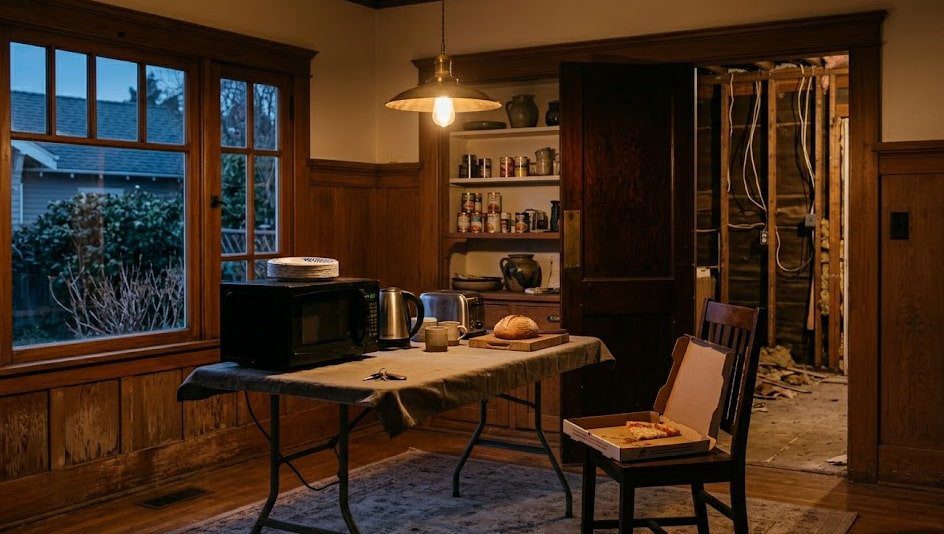
We turned our dining room into what I optimistically called "the kitchen station." Derek called it "the survival bunker." Both were accurate.
Item | Why We Needed It | Did It Work |
|---|---|---|
Microwave on a folding table | Reheating leftovers, instant oatmeal, frozen vegetables | Essential |
Electric kettle | Coffee, tea, instant soup, hot water for bottle warming | Used hourly |
Toaster | Bagels, frozen waffles, the only breakfast Leo reliably ate | Life-saving |
Mini fridge (borrowed) | Milk, yogurt, deli meat, cold brew concentrate | Would have failed without it |
Paper plates and plastic cups | No kitchen sink meant no dishwashing | Saved our sanity |
Cooler as a pantry | Dry goods, bread, snacks, fruit | Adequate but messy |
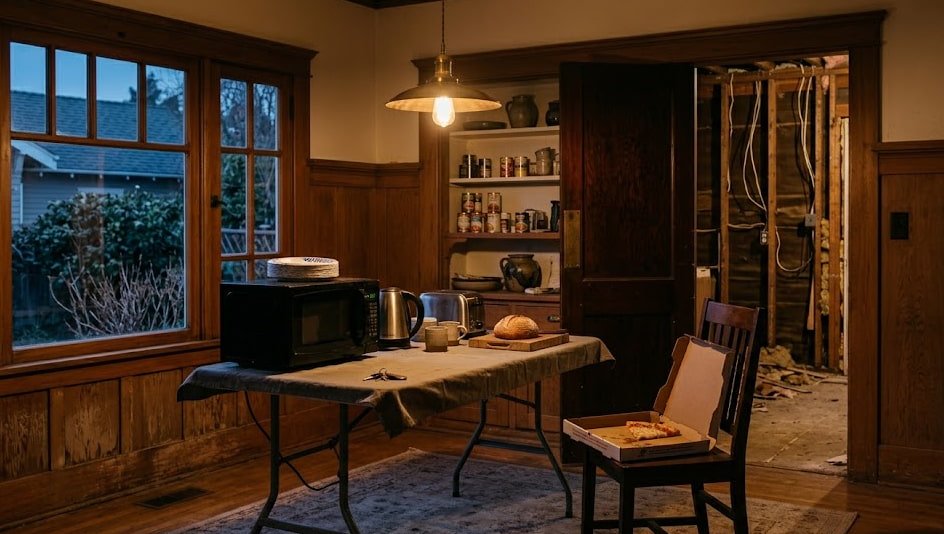
I arranged the folding table against the dining room wall, plugged everything into a single power strip that Derek had checked could handle the load, and covered the dining table with a washable tablecloth. It wasn't pretty. It was functional. I repeated that distinction to myself many times.
The Meal Plan That Wasn't
I made a spreadsheet before demolition started. Planned a week of microwave meals and no-cook dinners. Day one, Emma refused every single thing on the plan. Day two, Leo discovered he could reach the paper plates and pulled an entire stack onto the floor. By day three, the spreadsheet was buried under a pile of takeout menus.
Here's what we actually ate:
Monday: Pizza (cheese for the kids, pepperoni for us)
Tuesday: Rotisserie chicken with microwave steamed vegetables
Wednesday: Pizza again (no one complained)
Thursday: Burritos from the place three blocks away
Friday: Breakfast for dinner — toaster waffles, scrambled eggs in the microwave, fruit
Saturday: Takeout Thai, eaten directly from containers
Sunday: Pizza a third time (Emma declared it "pizza week")
Monday: Derek's parents brought lasagna and actual plates
I stopped feeling guilty around day four. Feeding four people without a kitchen is not the moment to audition for a cooking show. It's the moment to survive.
The Thing About Toddlers and Construction Zones
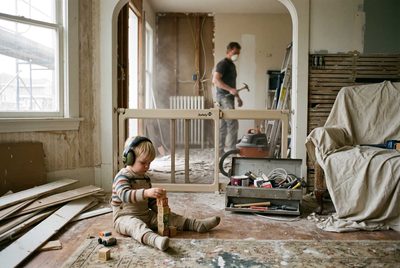
Leo was two during kitchen demolition. I'd imagined keeping him safely separated from the construction area with a baby gate. What I hadn't imagined was his complete refusal to eat in the temporary setup. The microwave beeped, he cried. The kettle boiled, he covered his ears. He wanted his high chair in its usual spot, and its usual spot was now a pile of plaster dust.
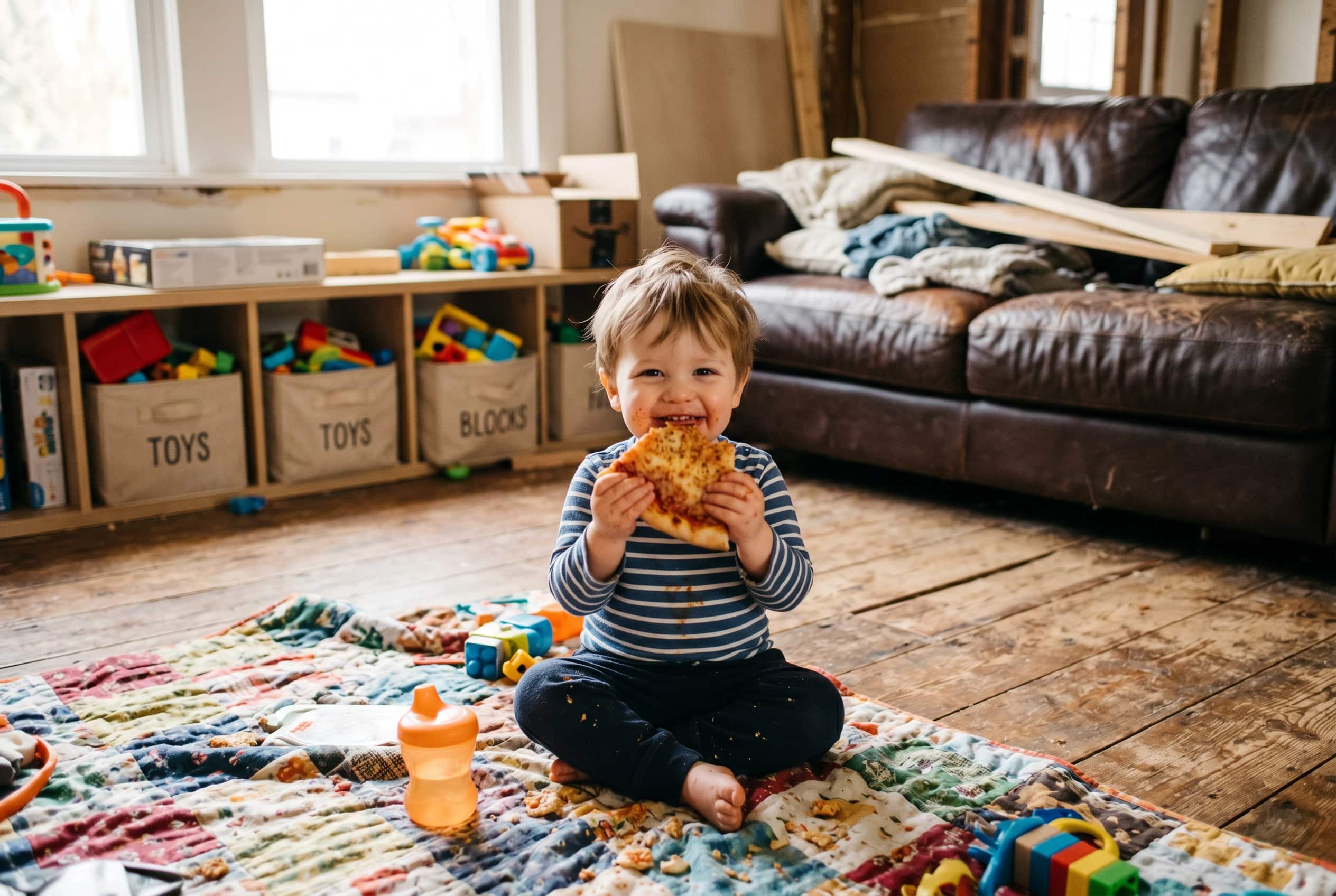
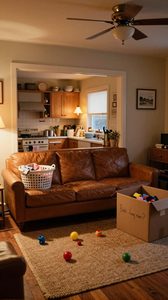
We learned to feed him first, before the noise started. We learned to let him eat on a picnic blanket on the living room floor, which he thought was an adventure. We learned that "normal" during renovation is whatever keeps everyone fed and moderately calm.
What I'd Do Differently
The temporary kitchen worked, but barely. Here's what I'd change if I had to do it again:
Set up the temporary kitchen in a room farther from the construction zone
Prep and freeze two weeks of meals before demolition day
Buy more paper plates than I think I need, then buy another pack
Accept by day one that takeout is not a failure — it's a strategy
The Surprising Part
On the last night without a kitchen, we sat on the living room floor eating pizza from the box. Emma announced it was "the best dinner ever." Derek caught my eye and smiled. Leo, covered in tomato sauce, clapped.
It wasn't the kitchen that made those dinners work. It was the four of us, sitting together on the floor, too tired to pretend this was anything other than a mess. Sometimes the mess is where the good stuff happens.
Take your time — your house will still be here tomorrow.
No notes yet — write the first one.