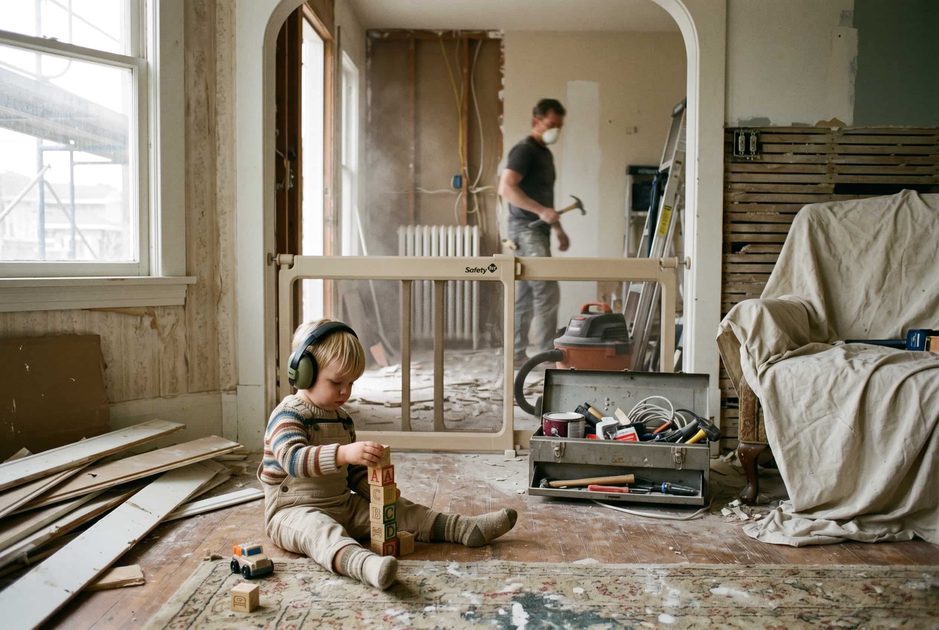
The Toddler Variable No One Puts in the Timeline
When I was still working at the design firm, I wrote renovation timelines for a living. I'd map out demo week, rough-in, drywall, trim, paint — everything in neat Gantt charts that clients would tape to their refrigerators. Not once did I factor in a twenty-five-pound human who naps from one to three and puts everything he finds into his mouth.
Then I had Leo. And we started renovating our own house. And I discovered an entire category of renovation challenges that no contractor, no design textbook, and certainly no Pinterest board had ever prepared me for.
Here's what I wish someone had told me before I tried to run a construction site and a toddler simultaneously.
The Dust Is Different When Your Kid Breathes It
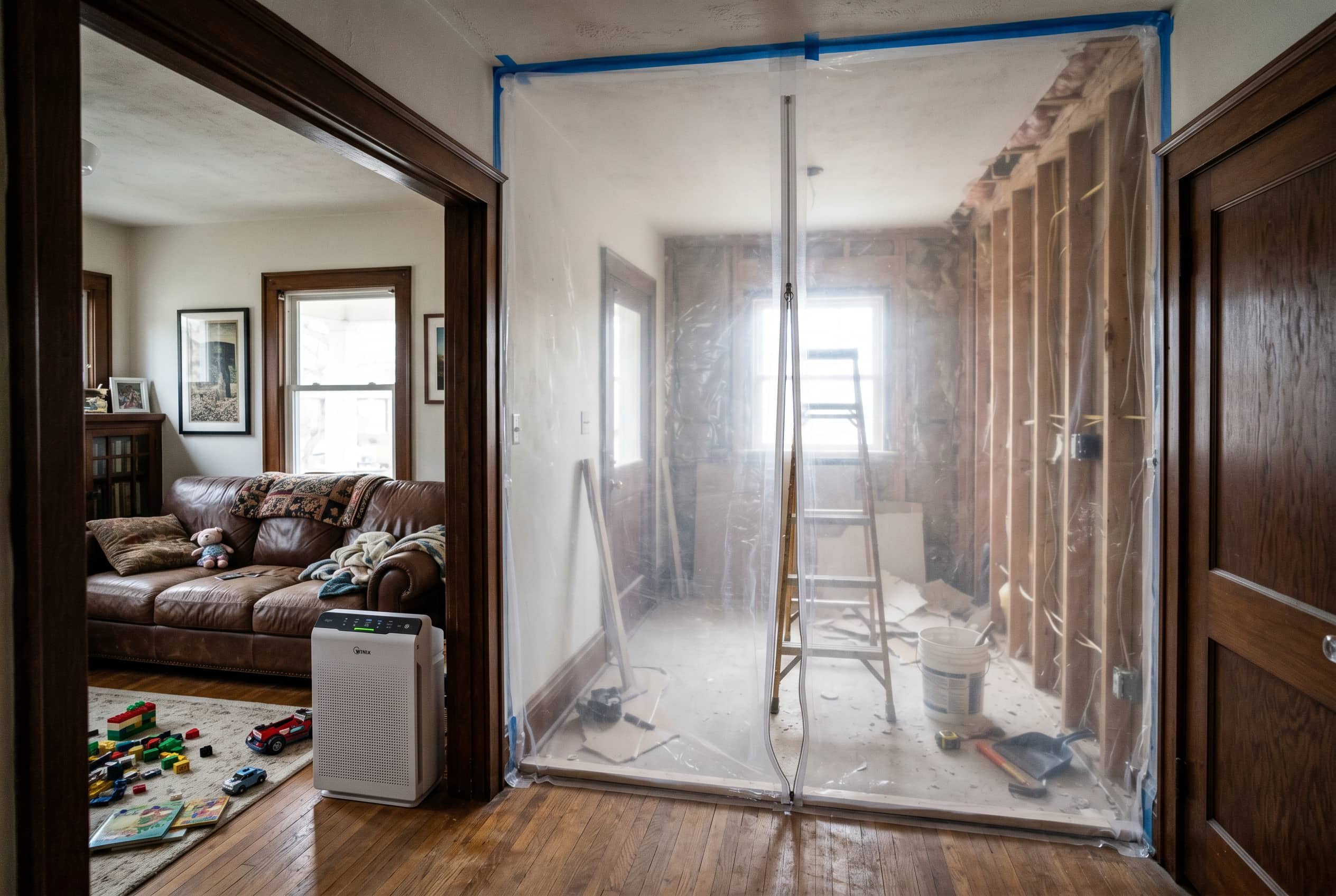
Construction dust is not regular household dust. It's a cocktail of drywall particles, old plaster, sawdust, and — in a house our age — potentially lead paint residue and asbestos fibers from decades-old building materials. When you're an adult, you wear an N95 mask and move on. When you have a toddler who spends most of his life within two feet of the floor, dust becomes an entirely different kind of problem.
We made three non-negotiable rules before demo started:
Plastic sheeting zip-walled between construction zones and living areas, sealed at every edge
A HEPA air purifier running continuously in the room where Leo slept
Shoes removed at the construction zone boundary, no exceptions
I also wiped down every surface in the living area at the end of each workday, which sounds excessive until you watch a two-year-old lick a windowsill. It happened. I was glad I'd wiped it.
Nap Times Are Now Construction Hours
The single most stressful logistical puzzle of the entire renovation was Leo's nap schedule. He napped from one to three every afternoon. Our contractors, reasonably, wanted to work during daylight hours. The sound of a reciprocating saw does not respect a sound machine.
I negotiated a system with our contractor that I'm still proud of: loud demo and cutting happened between nine and noon. Quieter work — sanding by hand, measuring, planning cuts, cleanup — happened during nap hours. It required more coordination and it definitely added a day or two to the overall timeline. But a well-rested toddler is easier to parent than an overtired one, and a construction schedule that ignores the human beings living in the house is a schedule destined to fail.
What Can Actually Go Wrong: A Quick List
The Risk | How a Toddler Finds It | What We Did |
|---|---|---|
Exposed outlets and wires | Tiny fingers are magnetically drawn to holes in walls | Outlet covers on every single exposed box, even temporary ones |
Tools left at toddler height | Hammer on a low step stool, screwdriver on the floor | End-of-day tool sweep before every evening |
Paint and solvent fumes | Off-gassing lasts hours longer than anyone admits | Low-VOC or zero-VOC paint only, windows open with fans for 48 hours after painting |
Loose hardware and screws | They look like treasure to a two-year-old | Magnet sweep of floors at the end of every single workday |
Unstable surfaces and sharp corners | Temporary plywood counters, exposed stud edges | Walk the space every morning before Leo was allowed in, at his eye level |
The Contractor Relationship Shifted
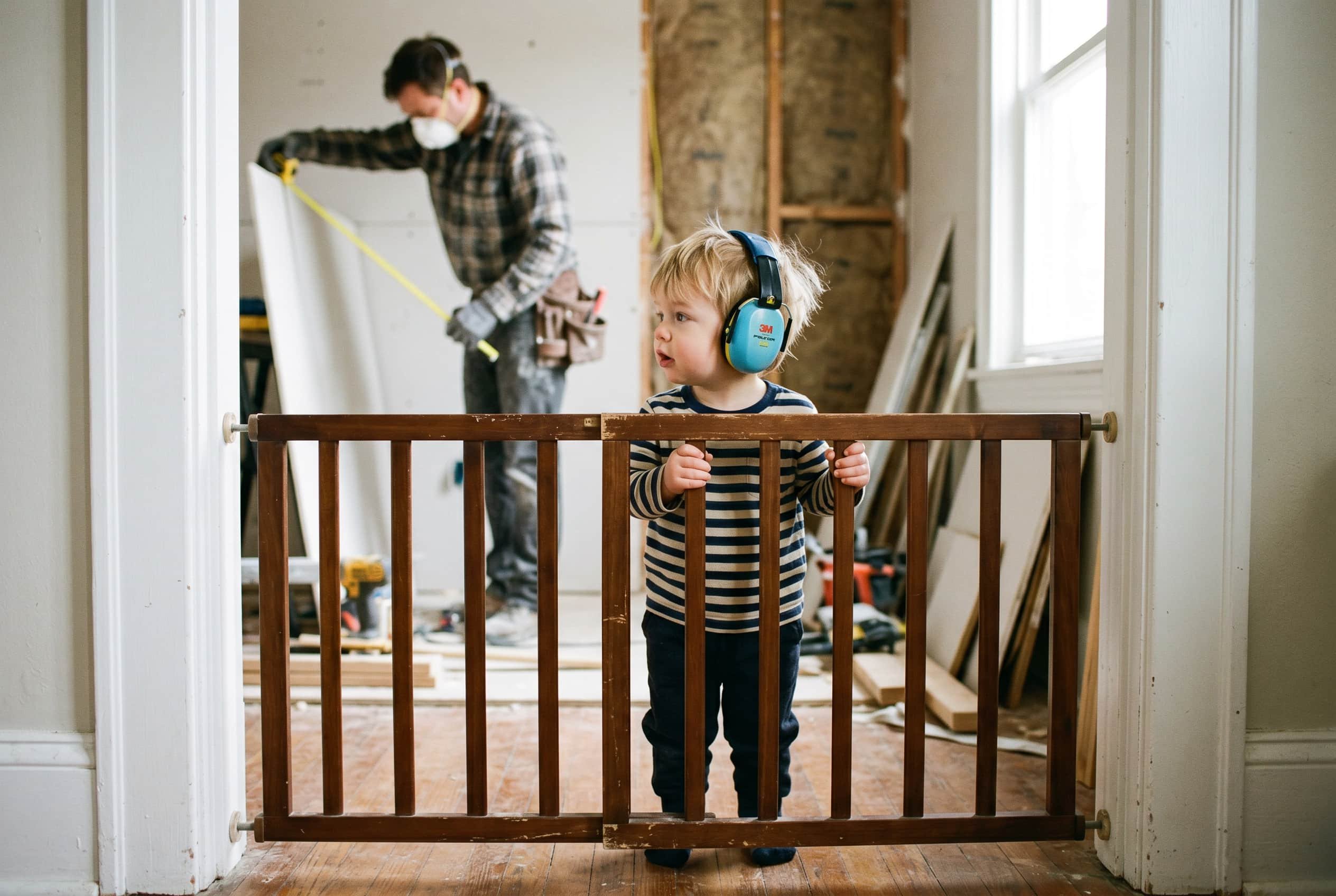
I had to explain to our contractor, a lovely man named Carlos who has three grown children of his own, that our renovation needed to work around a small person who didn't understand the phrase "stay out of that room." To his credit, Carlos adapted immediately. He started narrating what he was doing when Leo was nearby, letting him watch from behind the baby gate. He called Leo "el jefe pequeño" — the little boss. It took the fear out of the noise and the strange men in the house, and it gave Leo a sense that the construction was something interesting rather than something threatening.
That relationship mattered more than I expected. When your contractor understands that a toddler lives here, he puts screws away. He sweeps more carefully. He keeps his language clean. Choose a contractor who gets it.
What I'd Tell Another Parent About to Start
If you have a toddler and you're about to renovate, here's the honest summary:
Plan your renovation timeline around your child's rhythms, not the other way around
Invest in dust containment before you invest in anything pretty
Do a child's-eye safety walk every morning — crawl if you have to
Find a contractor who doesn't just tolerate children but genuinely understands they live there
Give yourself permission to slow down when your child needs you to
The Gift Hidden in the Mess
One afternoon, during the last week of drywall, Leo stood at his baby gate watching Carlos tape seams. He held up his own little plastic hammer and banged it against the gate, mimicking the rhythm. Carlos turned around, saw him, and laughed. "He's learning," Carlos said.
And I realized: Leo wasn't just surviving the renovation. He was watching us build something. He was seeing, in the only way a two-year-old can, that a home is something you make — slowly, messily, with patience and care. That's a lesson I hope stays with him longer than the dust did.
Take your time — your house will still be here tomorrow.

No notes yet — write the first one.