The Advice I Wish Someone Had Handed Me
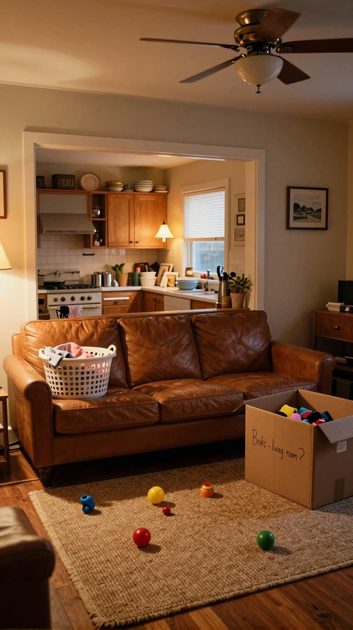
If I could sit down with the version of myself who stood in this bungalow for the first time, watercolor notebook clutched to her chest, full of sketches and spreadsheets and a timeline that would soon disintegrate — I would not tell her to plan better. I would not tell her to budget more carefully. I would not hand her a list of contractor recommendations or paint color codes.
I would hand her a cup of tea, sit her on the one chair that wasn't covered in drywall dust, and say: "Survive this year. Don't perfect it."
It's the advice no one gave me. It's the advice I now give every friend who buys a fixer-upper with young kids and a limited budget and a heart full of Pinterest boards. And it's the only piece of renovation wisdom I wish I'd believed from day one.
What I'd Do Differently If I Could Go Back
What I Did | What I'd Do Now | Why |
|---|---|---|
Tried to finish every room in the first year | Let the guest bedroom and the hallway wait until year two | Nobody visits to inspect your trim. They visit to see you. |
Apologized constantly for the mess | Stopped apologizing and started offering takeout menus instead | Friends don't need a finished house. They need a fed welcome. |
Set aggressive timelines that made me anxious | Set "ish" timelines — spring-ish, sometime before the holidays-ish | Old houses laugh at precise deadlines. Flexibility is sanity. |
Felt guilty about every incomplete project | Named three things that were done and felt grateful for each one | The human brain notices what's missing. You have to train it to notice what's finished. |
Let Some Rooms Wait
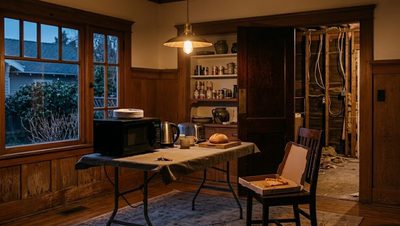
We renovated the kitchen in year one. The living room stretched into year two. The master bathroom took eight months that spilled across two calendar years. The hallway still has unpainted trim in one corner. The guest bedroom closet still has the original 1940s wallpaper — faded roses on a cream background — because nobody sleeps in there except my mother-in-law, and she says she likes the roses.
Letting a room wait is not failure. It's pacing. A house renovated all at once is a house where you burned through your savings, your patience, and your marriage in a single calendar year. A house renovated slowly, room by room, with pauses between projects, is a house where you still like each other when the dust settles.
The Dust Is Permanent (Sort Of)
I thought the dust would end when the drywall was done. Then I thought it would end when the floors were in. Then I thought it would end when we stopped sanding things. It's been three years, and I still find construction dust in drawers I swear I've cleaned.
Here's what I've accepted: an old house in renovation sheds its history constantly. Plaster crumbles. Wood shrinks and expands. The house breathes, and its breath is dusty. You can fight it, or you can buy a better vacuum and move on with your life.
I bought a better vacuum. I also stopped trying to make the house look like nobody was renovating it. The dust is a byproduct of building something. It's not a moral failing. It's not a reflection of your housekeeping. It's just dust.
The Timeline Is Fiction, and That's Okay
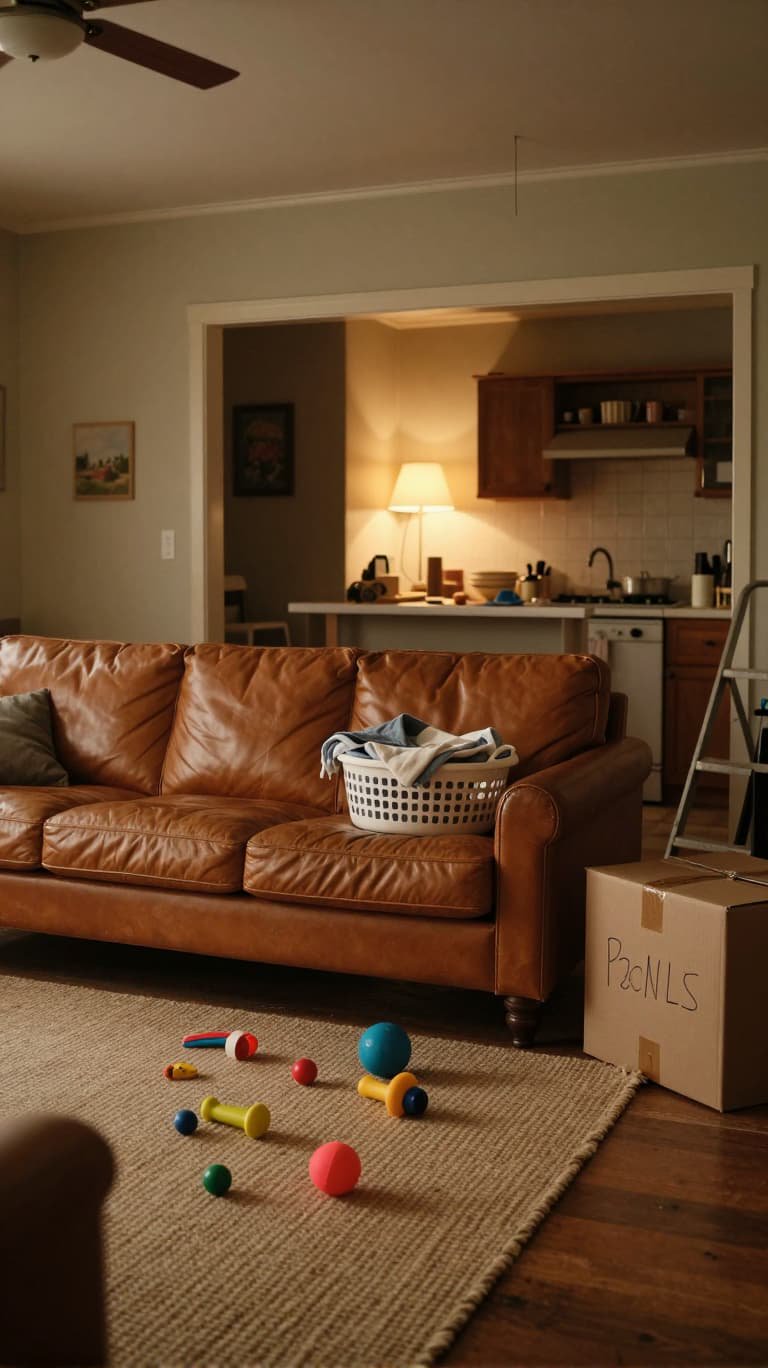
Every timeline I wrote for this house was wrong. Not approximately wrong — completely wrong. The kitchen took three months longer than planned. The living room took six months instead of six weeks. The bathroom took eight months instead of eight weeks. I could list the reasons — permits, backorders, subfloor rot, grout disasters, a toddler who stopped napping, a global pandemic that scrambled supply chains — but the deeper truth is that old houses have their own pace.
You can rush a renovation. You can throw money at it, work weekends until you collapse, scream at the contractor, and force the house into your schedule. Or you can accept that the house has been standing for ninety years and it will take as long as it takes.
I chose the second option. Eventually. After I'd tried the first one and exhausted myself.
The Most Important Renovation
Here's what I didn't understand in year one: the house is not the most important thing you're renovating.
While you're picking tile and negotiating with contractors and scrubbing drywall dust off every surface, your children are growing. Your marriage is being tested by stress and dust and decisions that feel enormous in the moment and forgettable afterward. Your own patience is being stretched to its breaking point and, if you're lucky, beyond it — into a wider, softer capacity for waiting.
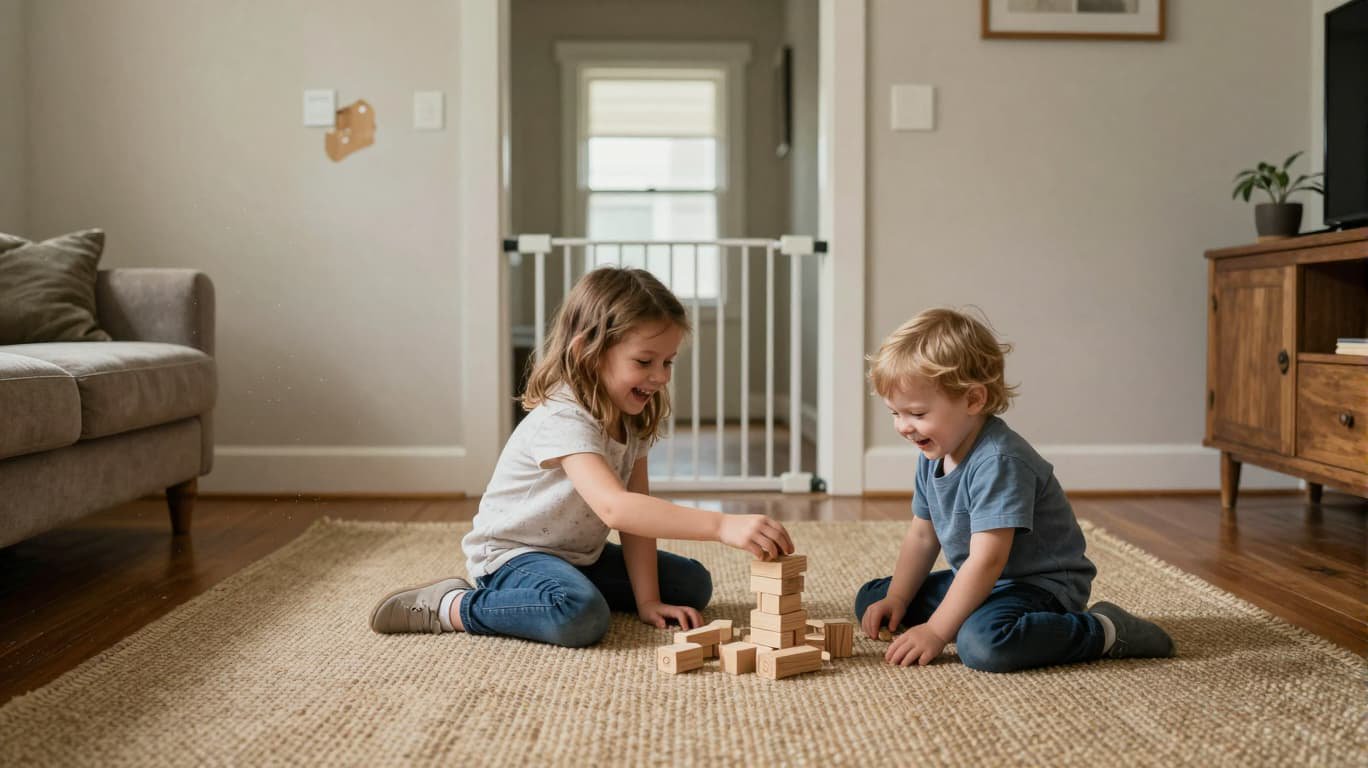
The house will get finished. The trim will get painted. The wallpaper will come down. But the people you're living with during the renovation — they're the project that matters most. If the renovation is stealing your presence, your patience, your ability to sit on the floor and build a block tower because the grout color is wrong and you can't stop thinking about it — the renovation is costing too much.
What Surviving Looks Like
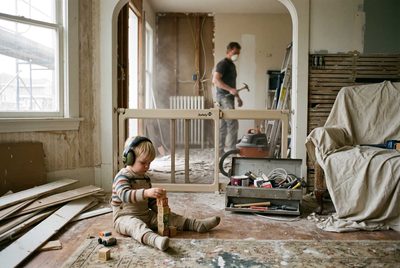
Surviving the first year looked like this for us: takeout on the floor when the kitchen was gutted. A plastic-sheet wall that stayed up for months. Saturday mornings at Home Depot with a toddler in the cart. Arguments about faucet finishes that felt world-ending and weren't. Nights where Derek and I sat on the one finished piece of floor and admitted we were in over our heads.
It also looked like this: Emma drawing her first picture of "our house" with the stepladder included. Leo learning to walk on the plywood subfloor before the hardwood was installed. The contractor teaching us things we'd never have learned from a book. The beam in the living room that almost broke us and then became the thing we love most.
The Advice I'd Give You
If you're in your first year of a fixer-upper with young kids, here is the advice I'd give my past self — and now, you:
Let some rooms wait. No one is judging you except you
Stop apologizing for the mess. The people who matter don't care
Write your timelines in pencil, and then erase them entirely
Spend as much energy on your relationships as you spend on the renovation
Notice what's done more than what's not done
Know that the dust will settle eventually, but the memories of this hard, beautiful year will stay
This blog began with a before. It's not ending — the house will never truly be done — but this chapter is closing. The rooms are mostly painted. The floors are mostly in. The children are growing, and the house is growing with them. We survived the first year. We didn't perfect it. And that was exactly right.
Take your time — your house will still be here tomorrow.
No notes yet — write the first one.