The Gaps in My Design Education
I graduated from UCLA Extension's interior design program with a strong portfolio and a lot of confidence. I could specify furniture, select finishes, draw floor plans, and present a design concept to a room full of clients without breaking a sweat. I knew color theory. I knew lighting layers. I knew how to make a room look beautiful in photographs.
Then I started working on real job sites, and within the first month I realized how much I didn't know. Not about design — about building. About what actually happens inside a wall. About why a contractor pauses before answering your perfectly reasonable question about moving a doorway. About the physical reality that every design decision has to survive.
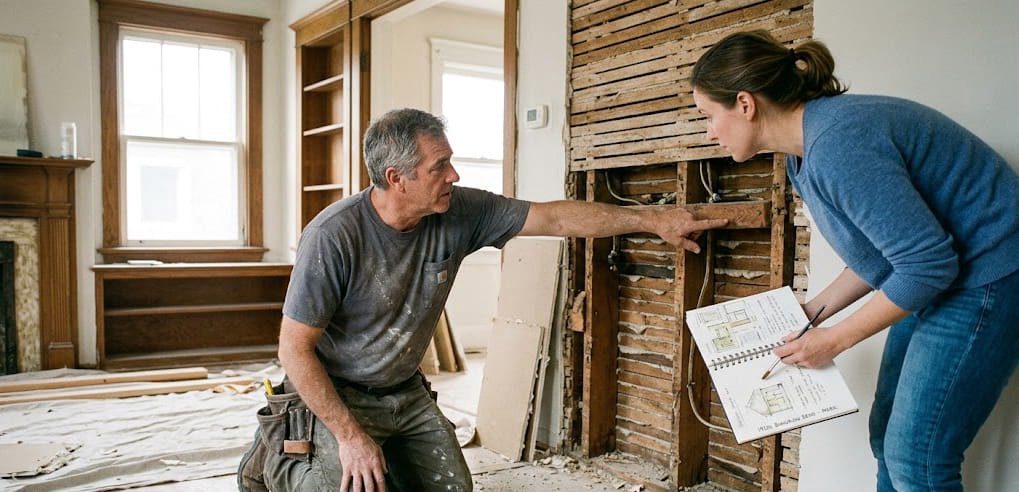
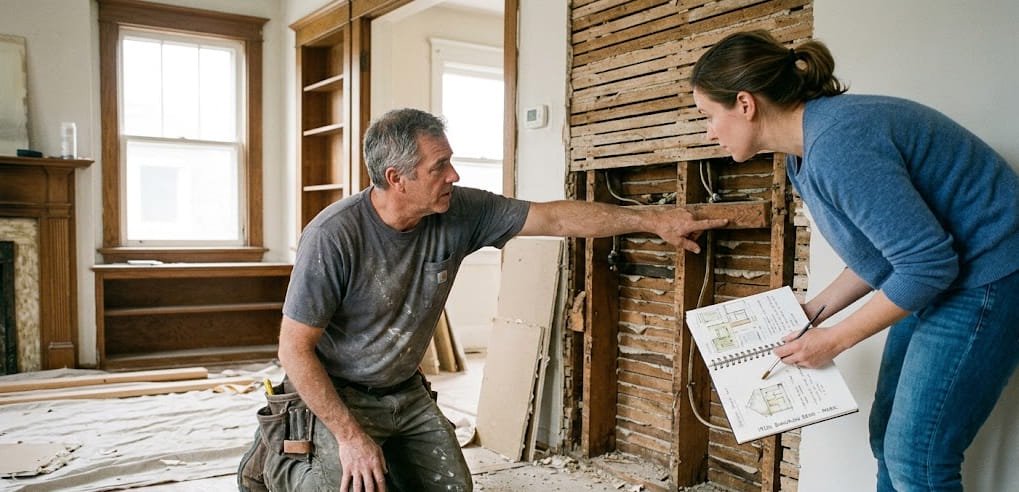
The person who taught me most of what I now know about construction wasn't a professor or a mentor designer or a book. It was Carlos, the first contractor I worked with regularly at the firm, and later the man who helped us gut our own kitchen.
Design School vs. Job Site Reality
What I Learned in School | What Carlos Taught Me on Site |
|---|---|
How to draw a perfect elevation | Why that elevation might fail if the wall isn't plumb |
The aesthetic difference between marble and quartz | The structural difference — and why a 90-year-old floor can't always hold marble weight |
That there's a standard order of operations in renovation | That every house has its own order, and ignoring it adds weeks and thousands |
How to present confidently to clients | How to listen to a house before telling it what to become |
Lesson One: Structural Order Is Everything
In design school, I was taught to think about a room from the inside out — finishes first, then the surfaces they sit on, then the walls. Carlos taught me to think the other way around: foundation, framing, plumbing, electrical, drywall, then finishes. If you pick your tile before checking whether the subfloor is level, you've designed a problem, not a room.
I made this mistake exactly once on a client project. I'd specified a heavy cast-iron soaking tub for a second-floor bathroom without checking the joist structure below it. Carlos looked at my drawing, looked at the floor, and said quietly, "This tub is going to end up in the living room if we don't add support." We added support. It cost the client two extra days and fifteen hundred dollars. I never forgot to check the bones first again.
Lesson Two: Material Sequencing Isn't Optional
The second thing Carlos taught me was the invisible art of sequencing — the order in which materials arrive, get installed, and get protected. It's the least glamorous part of renovation and the one that most determines whether a project stays on schedule.
Tile has to be on site before the tile setter arrives. The tile setter can't work until the drywall is finished. The drywall can't go up until the electrical rough-in passes inspection. One broken link in that chain, and everyone's calendar falls apart.
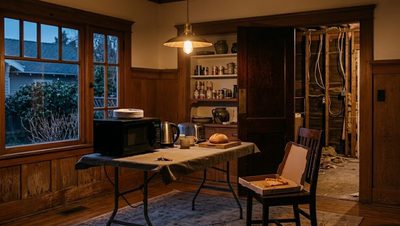
When we renovated our own kitchen, I thought my designer training had prepared me to manage this. It hadn't. Carlos was the one who told me to order the cabinets six weeks before demo day so they'd arrive during week four, right when the drywall was finishing. He was the one who reminded me that appliances need to sit in the garage for two weeks while the floor acclimates. No design textbook I ever read mentioned appliance acclimation.
Lesson Three: An Old House Talks — If You Listen
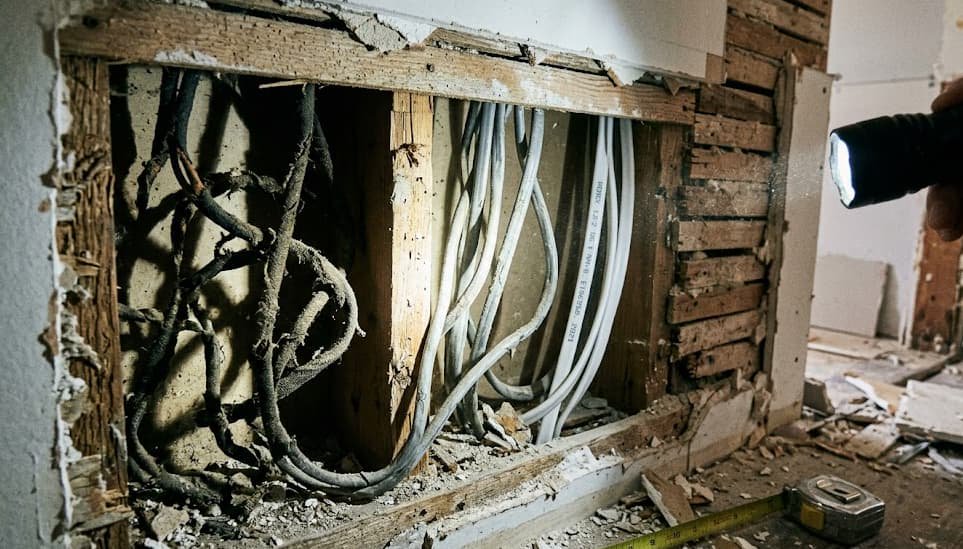
Our 1920s bungalow had been renovated at least twice before we bought it. During demo, Carlos found three generations of electrical wiring tangled behind the kitchen wall — cloth-wrapped from the 1940s, aluminum from the 1970s, and a partial Romex update from sometime in the early 2000s. He stood there looking at it for a long minute before speaking.
"A house tells you what it's been through," he said. "You just have to stop and look."
That pause — the willingness to stop and look — is the thing I most try to carry into my own renovation decisions now. Before Carlos, I would have pushed forward, eager to see the pretty finished room. Now I know that the things you discover during demo are gifts, not obstacles. They tell you what the house needs before you impose what you want.
Lesson Four: Humility Is a Design Skill
The most important thing Carlos ever taught me wasn't technical. It was that being good at design doesn't mean you're good at everything, and pretending otherwise is expensive.
I used to feel embarrassed asking questions on job sites, worried I'd look like the designer who didn't know enough. Now I ask constantly. What does that pipe do? Why can't we put a doorway there? What would you do differently if this were your house? Every question is a deposit into an account I've drawn on for years.
A good contractor is not just labor you hire. A good contractor is a collaborator, an educator, and sometimes the person who saves you from your own beautiful, impractical idea.
What I'd Tell My Younger Designer Self
If I could go back to the day I graduated, I'd tell myself this: your degree is a starting point, not a finish line. The people who actually build the rooms you draw know things you don't. Listen to them. Respect their time and their expertise. Buy them coffee. Ask them questions and then be quiet while they answer.
The best designers aren't the ones who know everything. They're the ones who know who to learn from — and they show up ready to learn, every single time.
Take your time — your house will still be here tomorrow.


No notes yet — write the first one.