The Question Every Budget Asks
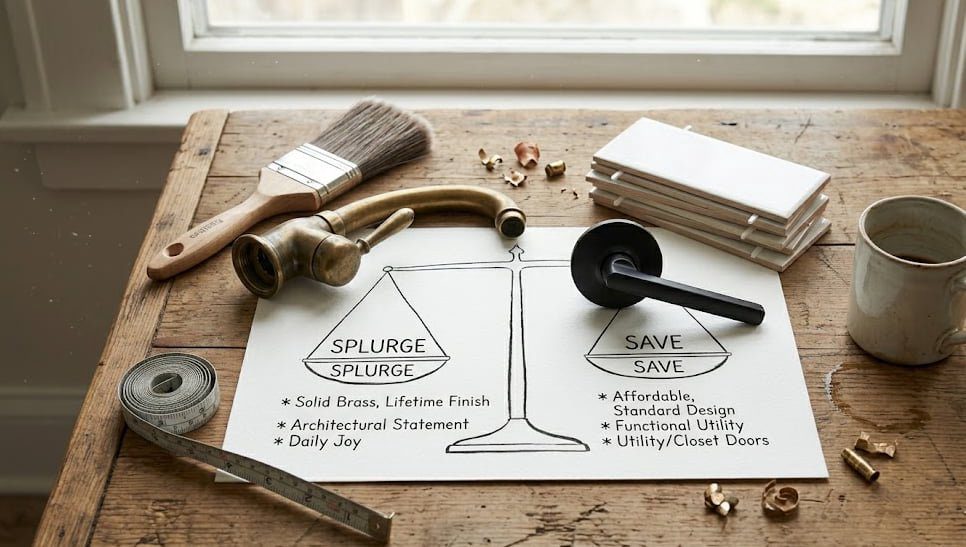
When you’re renovating an old house on a real family budget, every single decision feels weighted. Should we stretch for the solid brass hardware or save with the builder-grade option? Is the expensive paint worth it? Where does "cheaping out" cross the line from smart savings into a future headache?
I’ve faced this question hundreds of times — first as a junior designer specifying finishes for clients with generous budgets, and now as a mom renovating her own 1920s bungalow with a calculator always within reach. The wisdom comes down to this: spend where it protects your home or your daily experience, and save where the difference is purely aesthetic or status-driven.
Never Cheap Out On These 3 Things
1. Anything That Stops Water
Water is the enemy of every house, especially an old one. If there’s one place where spending more buys you genuine protection, it’s anything involving plumbing or waterproofing.
What to spend on:
Shower waterproofing systems (Schluter Kerdi or similar). A failed shower pan rots the subfloor and sometimes the joists below it. The repair cost is astronomical.
Supply line shut-off valves. The cheap ones corrode. Replace them with quarter-turn brass valves during any plumbing rough-in.
A good kitchen faucet. We chose a Delta Trinsic in matte black — solid brass internals, magnetic docking spray head. At $280, it wasn't the most expensive option, but it has survived two years of constant use without a single drip or finish issue.
I’ve seen a $30 shower valve destroy a $20,000 bathroom within three years. The math on that doesn't work.
2. The Subfloor and Underlayment
Nobody posts photos of their subfloor on Instagram. It's the least glamorous line item in any renovation budget. But it's also what your entire floor lives on. If the subfloor moves, creaks, or holds moisture, your beautiful new tile or hardwood fails with it.
During our kitchen renovation, Carlos found a section of subfloor near the back door that had been quietly rotting for decades. Replacing it cost $400 and delayed us by a day. Leaving it would have meant our new engineered hardwood cupping within a year. The subfloor is not where you save money.
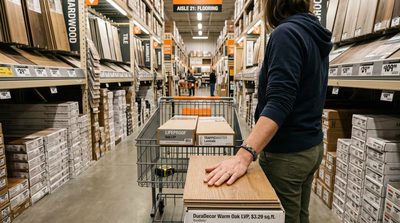
Similarly, don't buy the cheapest underlayment. A good underlayment reduces sound transmission, provides a moisture barrier, and helps your flooring feel solid underfoot. The difference is something you'll notice every single day.
3. Door Hardware You Touch Every Day
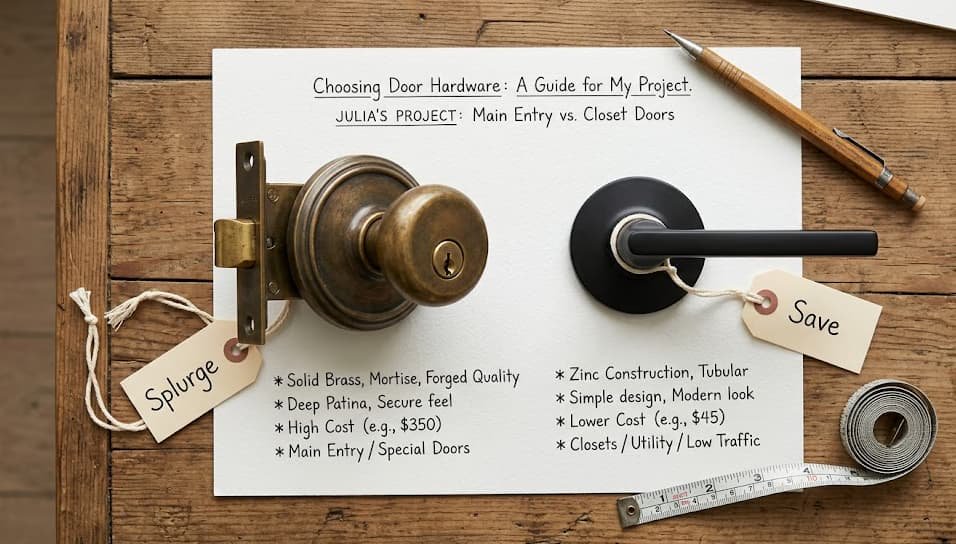
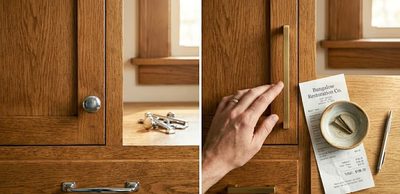
I don't mean every door handle in the house. I mean the front door, the kitchen pantry, the bathroom you use most — the ones you touch dozens of times a day. The tactile experience of a solid, well-weighted door handle is surprisingly significant. A flimsy, hollow-feeling lever announces itself every time you use it.
We replaced our front door handle with an Emtek solid brass mortise lockset. It wasn't cheap. It will also last fifty years and feel satisfying to turn every single time. For doors we rarely use — the hallway linen closet, the guest room — we bought solid but simple hardware from Schlage. Good, not extravagant.
Absolutely Save On These 5 Things
1. Decorative Light Fixtures
I love a beautiful light fixture. But the market for affordable, well-designed lighting has transformed in the last decade. Cedar & Moss, Shades of Light, even some of West Elm's lighting collection offer genuinely attractive options in the $100–$250 range that look far more expensive than they are.
I once specified a $1,400 designer pendant for a client's dining room. Six months later, I found something almost indistinguishable from a mid-range retailer for $170. The difference was the brand name and the metal gauge — visible only if you stood on a ladder and inspected the interior.
2. Paint — Within Reason
I buy Benjamin Moore and Sherwin-Williams paint. I don't buy the $80-per-gallon designer brands sold through interior design showrooms. The mid-range professional paints from the big manufacturers are excellent — durable, scrubbable, and available in thousands of colors.
What matters more than the price tag is the sheen. For homes with children, a washable matte or eggshell finish from Benjamin Moore's Regal Select line or Sherwin-Williams' Duration Home line has performed beautifully for us. I don't need paint that costs twice as much. I need paint that wipes clean when Emma touches the wall with jam on her fingers.
3. Kitchen Cabinet Boxes
This one might surprise people. I've used IKEA Sektion cabinet boxes in our own kitchen. They're well-engineered, equipped with soft-close hardware as standard, and entirely hidden behind the cabinet fronts. If you're on a budget, spending on the doors and drawer fronts while saving on the boxes is one of the smartest trade-offs in kitchen design.
We paired IKEA boxes with Semihandmade fronts in Sage. Total cabinet cost: roughly a third of what custom cabinetry would have run. No one has ever asked if our cabinets came from IKEA. They just run their hand over the soft-close drawers and look impressed.
4. Decorative Tile Accents
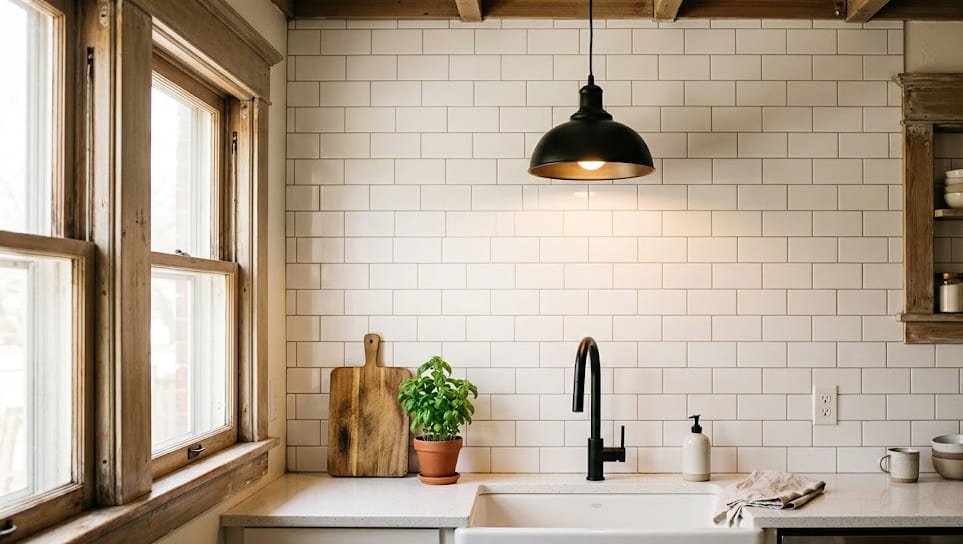
Subway tile costs roughly $2.50 per square foot at Home Depot. A hand-painted Moroccan accent tile can run $40 per square foot. Use the subway tile across most of the wall, and if you want a decorative moment, confine it to a small inset — behind the range, a narrow vertical stripe, a niche border. The impact is just as strong, and the savings are enormous.
5. Appliances (If You're Patient)
Appliance prices follow predictable seasonal patterns. New models arrive in September and October, which means the previous year's models go on clearance. We bought our Bosch dishwasher as an open-box return — full warranty, $300 off retail, a tiny dent on the side panel that faces a cabinet and is invisible. Our LG fridge was purchased during a Memorial Day sale for 25% off.
If you can plan your renovation around those clearance cycles and you're willing to live with a small cosmetic imperfection, you can get excellent appliances at substantial savings.
The Rule I Come Back To
Spend where it protects your house or where you'll physically touch something every day. Save where the difference is invisible, brand-driven, or can easily be swapped later. Most renovation regrets don't come from saving money. They come from saving money in the wrong places.
Take your time — your house will still be here tomorrow.

No notes yet — write the first one.