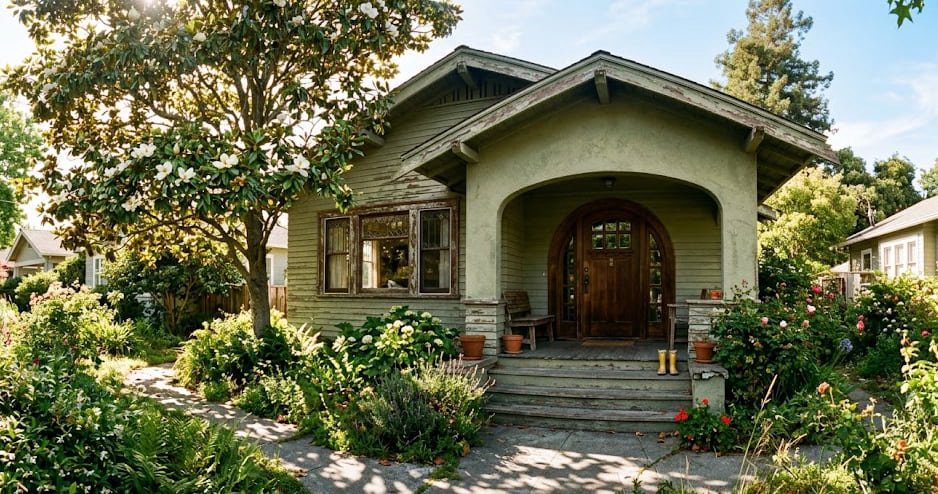
Saying Yes to a Fixer-Upper
I still remember standing in the living room for the first time, my watercolor notebook in hand, while our real estate agent nervously pointed out the “original character.” Derek, my husband, was silently counting ceiling cracks. Our daughter Emma, then two, had already started peeling a strip of floral wallpaper that had surrendered to gravity decades ago. Leo wasn’t even a thought yet.
Most people saw a house that needed too much. I saw a floor plan that could finally breathe. On a high school math teacher’s salary and my freelance design income, a turnkey home in any LA neighborhood we loved was simply out of reach. So we did what design-obsessed people do: we chose a fixer with good bones and a very long list of sins.
The Kitchen: A Time Capsule of Bad Decisions
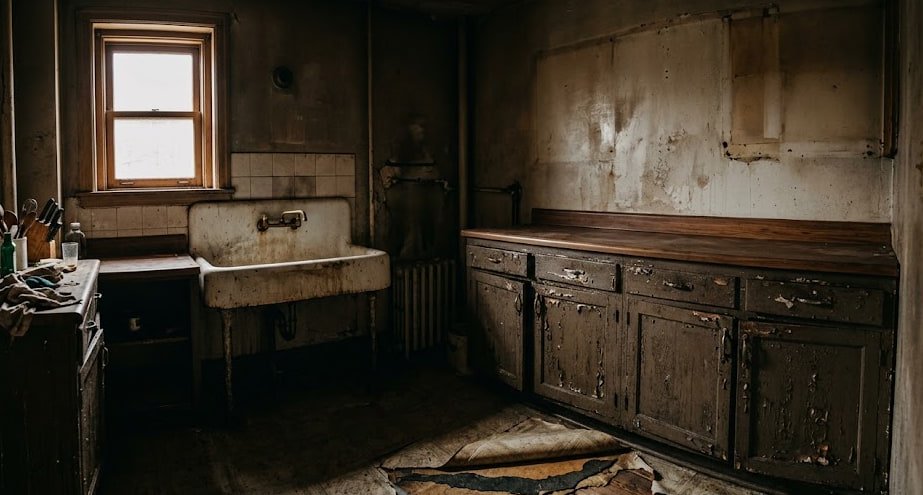
The kitchen was a museum of questionable choices. Three layers of linoleum, cabinets painted shut during the Reagan administration, and a layout that mocked the concept of a work triangle. I stood at the only functioning sink and turned slowly, already sketching in my head. Derek asked if we’d survive. I said quietly, “We’ll have a story.”
The Living Room: A Dark Tunnel with Good Bones
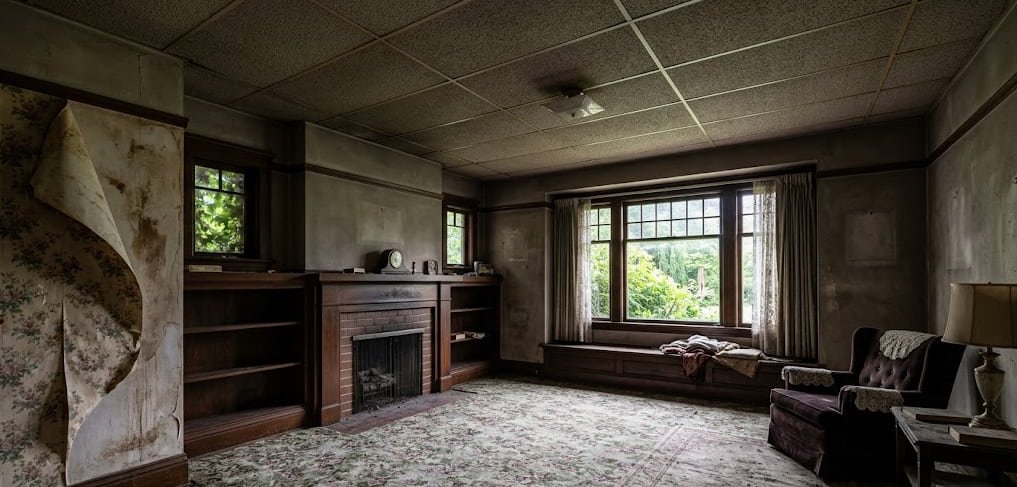
The living room had beautiful proportions but felt like a dark tunnel, thanks to a dropped ceiling from the 1970s. Original oak floors hid beneath three kinds of carpet. Single-pane wood windows were charming in photos, but drafty enough to make candles flicker indoors on a calm day. I ran my hand along the wall and felt the ghost of thoughtful design waiting underneath.
The Bathroom: Pink Tile and a Traffic Nightmare
The bathroom had pink tile — the kind that photographs well, until you notice the cracked grout and a showerhead that barely reached Derek’s shoulder. The Jack-and-Jill doors to two bedrooms meant anyone using the toilet had to lock three separate entries. I made a note in my watercolor book: traffic flow nightmare.
The Bedrooms: Sunny, Small, and Full of Surprises
The bedrooms were small but sunny, with plaster walls that had settled into gentle waves over nine decades. Emma chose her room immediately, drawn to a built-in corner shelf she declared perfect for her “treasures.” I saw a different list: asbestos testing, lead paint encapsulation, and many late nights watching plaster repair tutorials.
The Backyard and the Fig Tree
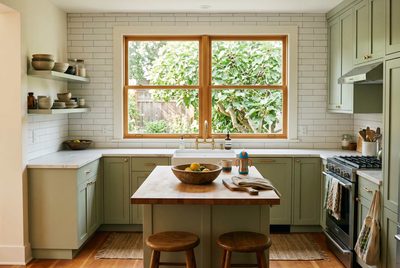
The backyard was a dirt patch anchored by one majestic, overgrown fig tree. I decided right then that our eventual kitchen would look out onto it. I sketched a rough floor plan, framing the tree with a window over the sink. In the margin, I wrote: Take your time.
What We Were Really Looking At: A Designer’s Before List
While Derek saw a honey-do list that would never end, I was cataloging trade-offs. Here’s a quick glance at what caught my eye in each space — the surface problems versus the deeper design issues.
Room | What Everyone Noticed | What a Designer Notices | Hidden Potential |
|---|---|---|---|
Kitchen | Ugly linoleum, stuck cabinets | No work triangle, wasted corner space, zero flow | Could steal space from the adjacent mudroom for a pantry |
Living Room | Dropped ceiling, old carpet | Original proportions intact, structural beam lines ready to expose | Removing the dropped ceiling could add 14 inches of height |
Bathroom | Pink tile, low shower | Jack-and-Jill layout created dangerous traffic patterns | Reconfigure into a private ensuite with proper zoning |
Bedrooms | Small, wavy plaster | Plaster walls meant solid soundproofing; corner shelf was a real built-in | Already had the right light orientation for a nursery |
The Beginning, Not the End
This blog begins here — not with after photos and styled shelves, but with the dusty, honest, unglamorous before. Because before you can build something good, you have to be brave enough to say yes to a house that isn’t finished yet. No pretension, just a designer’s eye and a family’s budget, figuring it out one room at a time.
Take your time — your house will still be here tomorrow.
No notes yet — write the first one.