The Mistake I Almost Made
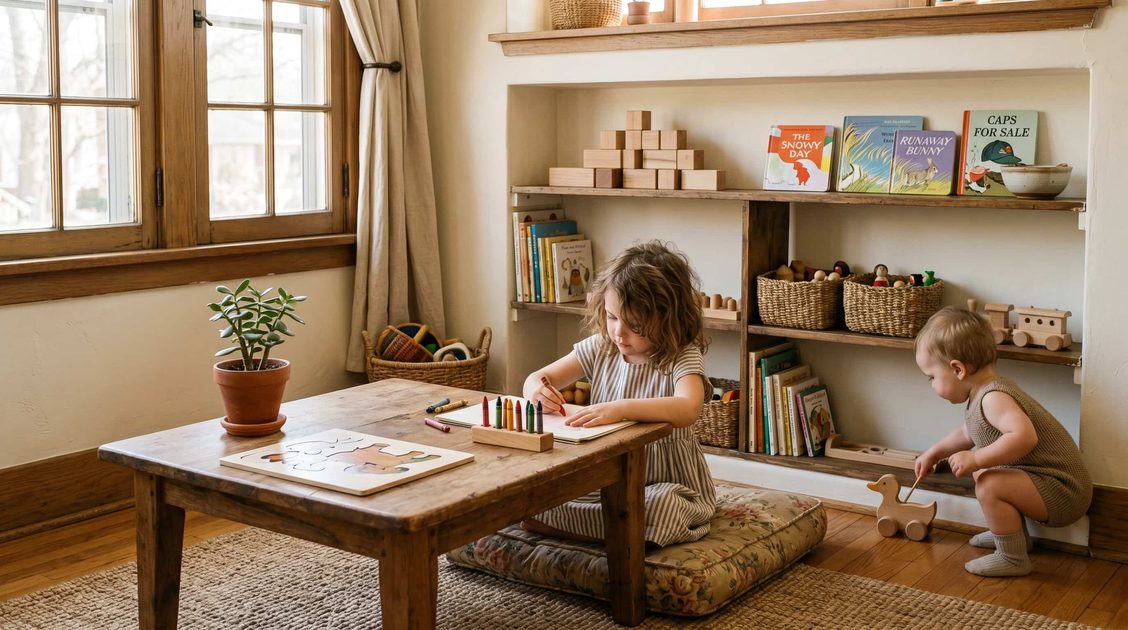
When Emma was two, I almost painted a tree mural on her playroom wall. I had the paint chips picked out, a projector borrowed from a friend, and a Pinterest board full of whimsical forest scenes. Derek talked me down with one quiet sentence: "She won't be two forever."
He was right. A themed room has an expiration date. The princess castle that delights a three-year-old embarrasses a nine-year-old. The dinosaur wallpaper that a five-year-old adores feels like a relic by second grade. I wanted a playroom that would evolve with our children — not one that would need a complete gut renovation the moment Emma discovered chapter books.
Here's what we built instead.
The Furniture That Does Double Duty
The key to a playroom that grows is furniture that can be reimagined as needs change. I chose every piece with two eras in mind: the toddler years and the preteen years. If something couldn't survive both, I didn't buy it.
Furniture Piece | Toddler Use (Ages 2-5) | Preteen Use (Ages 8-12) | What Makes It Work |
|---|---|---|---|
Solid wood table (IKEA LÄTT) | Art projects, snack time, puzzle central | Homework desk, craft table, Lego building station | Simple lines, no themed shapes, adjustable legs available |
Floor cushions (wool-filled) | Reading nook seating, fort building | Lounge seating for friends, gaming floor spot | Neutral linen covers, washable, no childish prints |
Low open shelving (wall-mounted) | Easy access to toys and board books | Display for collections, books, and eventually, devices | Adjustable shelf height, painted same color as walls |
Storage bench (wood, hinged lid) | Toy box, dress-up storage | Seat for putting on shoes, hidden sports gear storage | Looks like furniture, not a plastic bin |
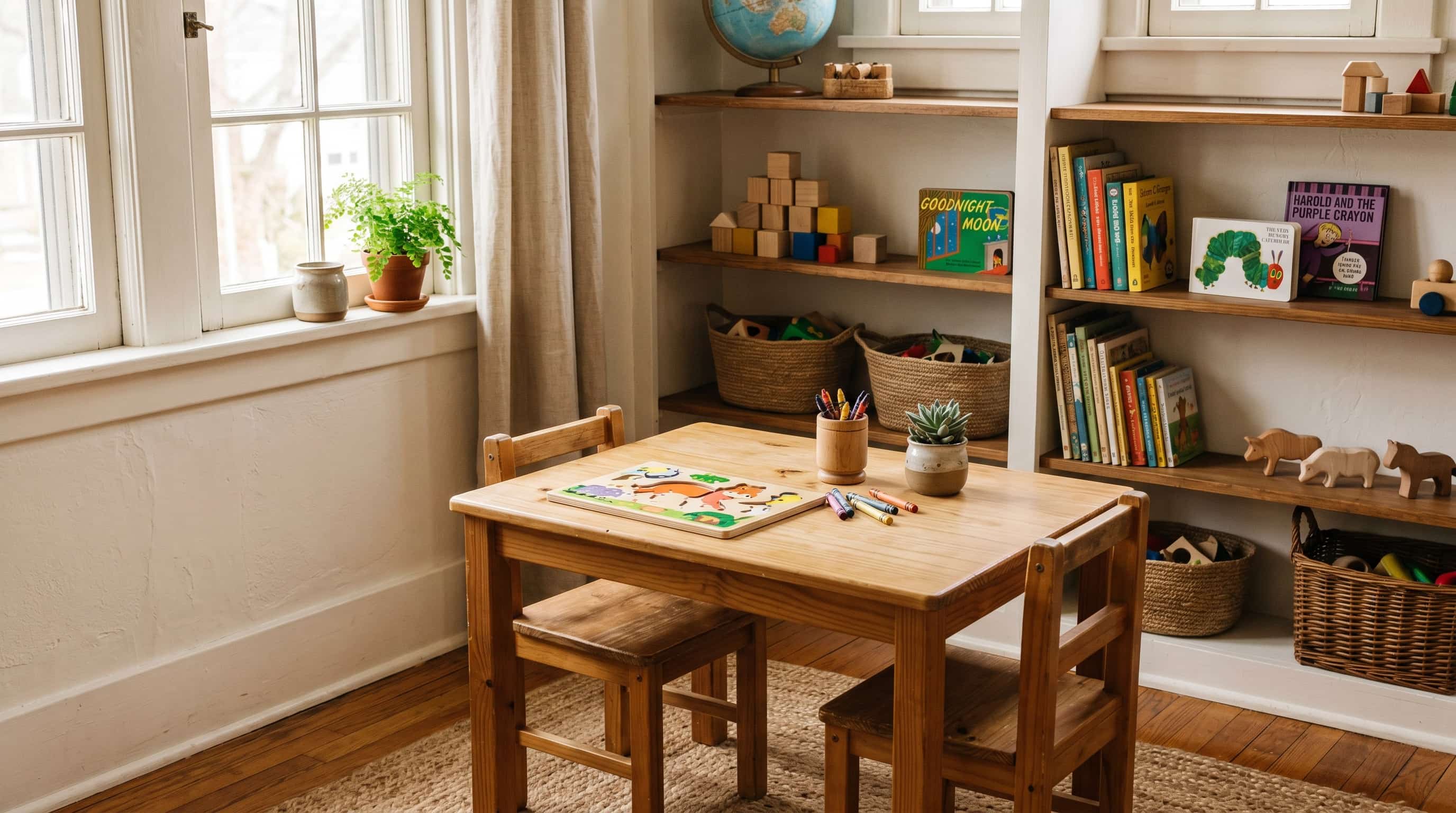
The table was the most important decision. I chose the IKEA LÄTT — a plain pine table meant for children but designed with adult proportions in mind. At $29, it's small enough for a toddler, sturdy enough for a ten-year-old's science project, and cheap enough that I won't mourn it if it eventually gets replaced. I paired it with two chairs from the same series and a bench that tucks underneath when not in use.
Storage That Adapts, Not Just Stores
Toy storage is where most playrooms fail the longevity test. Bins labeled "trains" and "blocks" in cute vinyl lettering are useful for exactly the window when your child plays with trains and blocks — and then you're left with bins that don't fit chapter books, art supplies, or the guitar they pick up in fifth grade.
I use open shelving with a mix of containers that can be repurposed: woven baskets in natural fibers, canvas bins in muted colors, and a few clear acrylic boxes for art supplies. Everything is interchangeable. When Emma outgrew her board book phase, the basket that once held them became her coloring book bin. No relabeling required.
What We Didn't Put on the Walls
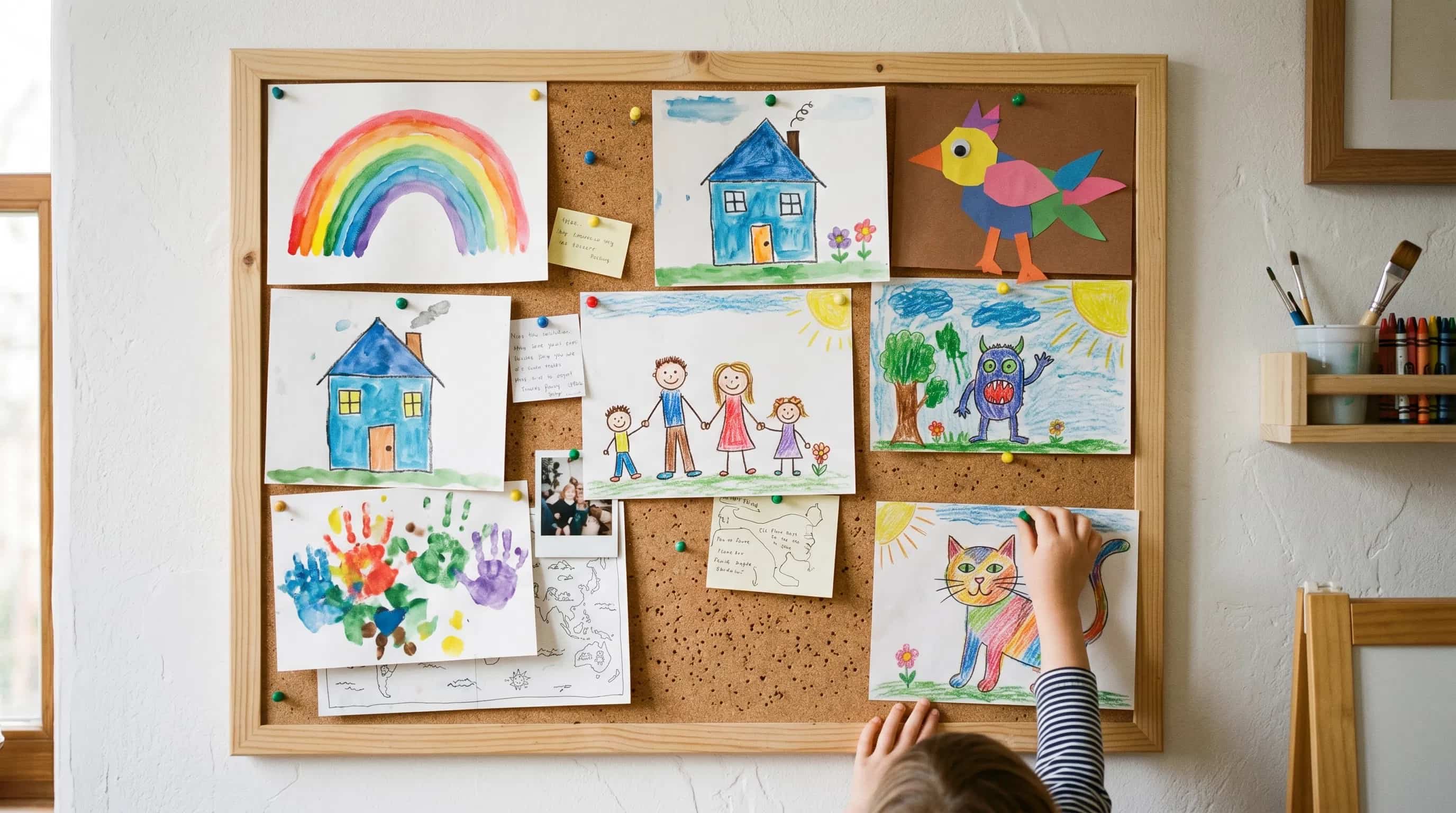
The walls are Benjamin Moore "Simply White" in a washable matte finish. No murals, no decals, no feature wallpaper with a short shelf life. Instead, I hung a large cork board at child height, painted the same white as the walls. Emma pins her latest watercolor masterpieces to it. When she's older, it can hold a calendar, photos of friends, or a study plan. The board cost $40 and took an afternoon to mount.
This is my one unbreakable rule for children's spaces: let the child's work be the decoration. Their art, their Lego creations on a shelf, the rock collection they arrange on the windowsill — those things tell the story of who they are right now, and they change organically as the child changes. No mural can do that.
The One Themed Thing We Kept
I'm not entirely heartless about whimsy. Emma and Leo share a set of linen play curtains — one panel printed with a soft constellation pattern — that hang from a tension rod in the corner. They use them for puppet shows, reading forts, and the occasional "secret hideout." When they're older, the curtains can come down in five minutes, and the corner becomes a desk nook. That's the difference between a themed object and a themed room: one is removable, the other requires a paint job.
What I Want Them to Remember
A playroom shouldn't freeze a child in time. It should be a backdrop flexible enough to accommodate whoever they're becoming this year. When I watch Emma at that little pine table — coloring now, but someday writing essays or building models — I don't see a toddler room. I see a room that's waiting for her to grow into it.
Build the backdrop. Let the child fill it in. And save the mural budget for something they'll still love when they're ten.
Take your time — your house will still be here tomorrow.
No notes yet — write the first one.